Can You Put A Mini Split Condenser In The Attic?
Last Updated on May 14, 2025 by Chad Peterson
Customers ask me if they can put their new mini splits in weird places. In the garage, on the roof, in a basement, or even under the deck. But not too many ask if they can put it in the attic. Actually, under a deck is quite feasible because they are side-discharged.
I had a customer install his mini-split in a garage. But it was more like a barn on the side of a house. He didn’t care if it added warm air in summer or cold air in winter to his barn-like shop area.
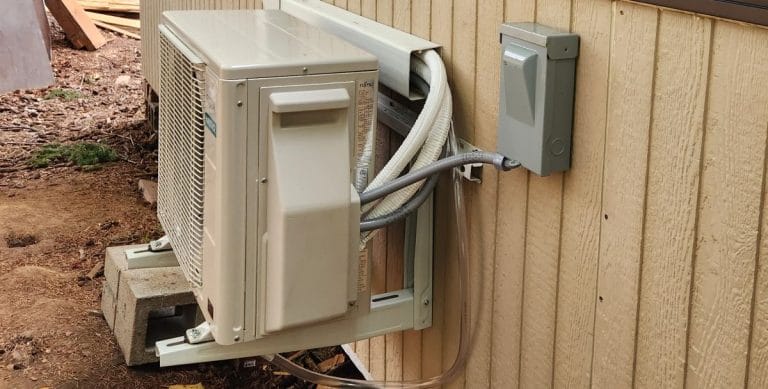
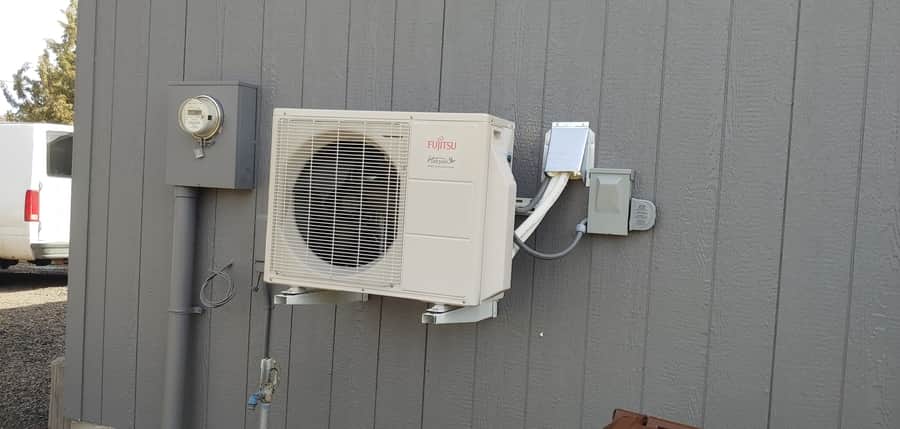
Another name for a mini-split condenser is “outdoor unit.” There is a really good reason it’s called an outdoor unit. There are several good reasons why a mini-split condenser should not be installed in an attic or any confined space. Mini split outdoor units need to be outside.
You need first to understand that a heat pump does not create cold air in the cooling mode or warm air in the heating mode. Heat pumps move heat from one place to another. They transfer heat from indoors to outdoors or vice versa.
This article concerns whether you can put a mini-split condenser in an attic. If you want to know more about how heat pumps work, I wrote an entire article cleverly describing how they function. You can read it by clicking here. It’s a guided tour, and I’m the tour guide.
An outdoor heat pump unit must be outside to eliminate the hot summer or cold winter air it has collected inside your home. When your house gets too warm in the summer, your heat pump collects the warm air and moves it outside by the refrigerant medium.
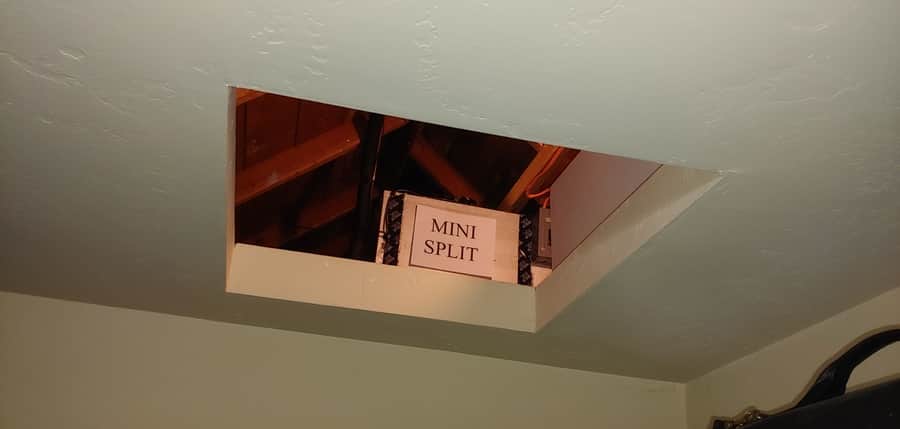
Placing the condenser in an attic would subject it to the extremes of weather that attics are so prone to develop. Attics can reach temperatures of around 140 degrees in summer. A condenser in that heat would likely not even begin to work. It would have nowhere to dispel the heat.
The heat pump’s internal temperatures would rise, and its high-pressure protection device would shut it off.
What Is The AC Unit In The Attic Called?
That is an excellent question. If you know you have a piece of HVAC equipment in your attic, then it’s got to be an air handler. Air handlers come in various forms. Generally, they are either gas or electric furnaces.
But how can an AC unit be in an attic and not be a mini-split condenser or outdoor unit? That’s because it’s an indoor part of a split system. With cooling-only units, it’s called an evaporator.
You have to call a heat pump an indoor unit because it’s an evaporator in the summer, and in the winter, it becomes the condenser. It’s designed to be indoors or in a confined place.
And to tell you the truth, it’s not even an ideal place for an indoor unit. The extreme temperatures are something that it has to compete with. When the attic is peaking in high temperatures in the summer, the hot air pours out of the duct system when the unit first cycles on.
Sometimes, I leave the fan on constantly to keep the room air flowing through the ducts. They are well insulated and only succumb to the heat when left static.
New codes are making it necessary to install all duct work and indoor equipment in conditioned spaces. That means false ceilings, soffits, and any configuration allowing all indoor HVAC in the conditioned space. There are higher costs and more square footage within the sealed structure.
So, by now, you may be catching on that an AC unit or a heat pump has to have an indoor and an outdoor unit. They can function as designed and last for many years when properly placed. Put them in a too hot or cold environment, and problems will be your companion.
Mini Split Icing Up Outside?
Fact of life is that mini splits ice up in winter, how much depends on climate. Will you be willing to have an iced-up mini split in your attic?
Those of us who own heat pumps have icing issues in climates that are sub-zero at times. Ice dams form on our roofs, and our heat pumps struggle to defrost.
Most mini-splits are designed to enter a defrost mode when sensors indicate a freezing problem. Some mini-splits can still produce heat in temperatures as low as minus 15 degrees. A good question to ask if you want to buy: will it heat in the dead of my winter temps?
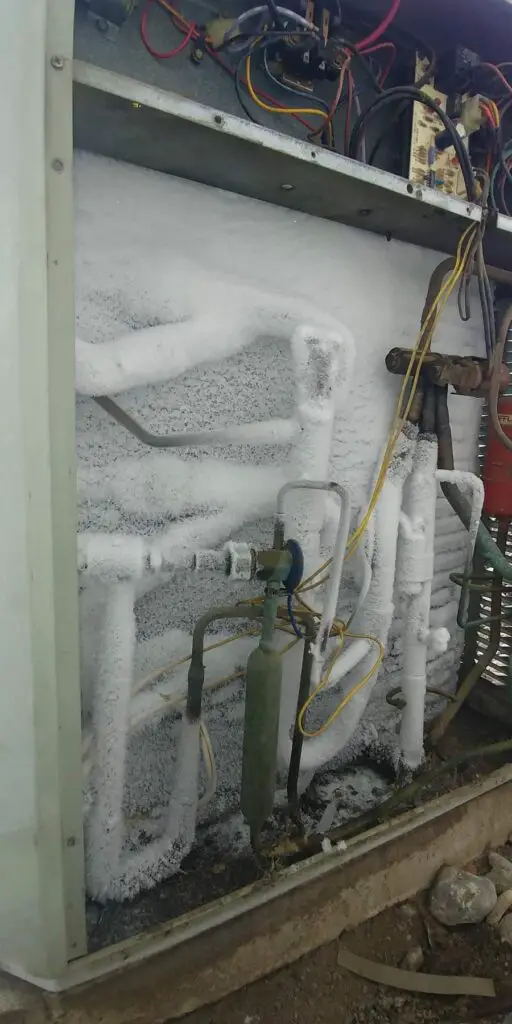
This is a serious consideration. Heat pumps ice up in winter when outdoor temperatures plummet near and below freezing. The image below is not a mini split. It’s an outdoor Trane heat pump unit packed with ice in winter.
The biggy splits have a defrost cycle just like the mini splits that cause them to reverse cycle every so often. This reverse cycle causes the unit to switch to cooling mode, and the outdoor coil becomes the hot coil and melts the ice. This one had a broken defrost cycle.
If and when a mini-split gets all iced up, where will all the water go? Maybe you could devise a type of drain pan for it to flow out of doors or down a plumbing drain. But that is also going to tend to freeze.
A drainpan heater or a defrost system. It’s a complicated way to go, and then there’s the warranty. I don’t know of a manufacturer that would stand behind their warranty if they knew their unit was in an attic.